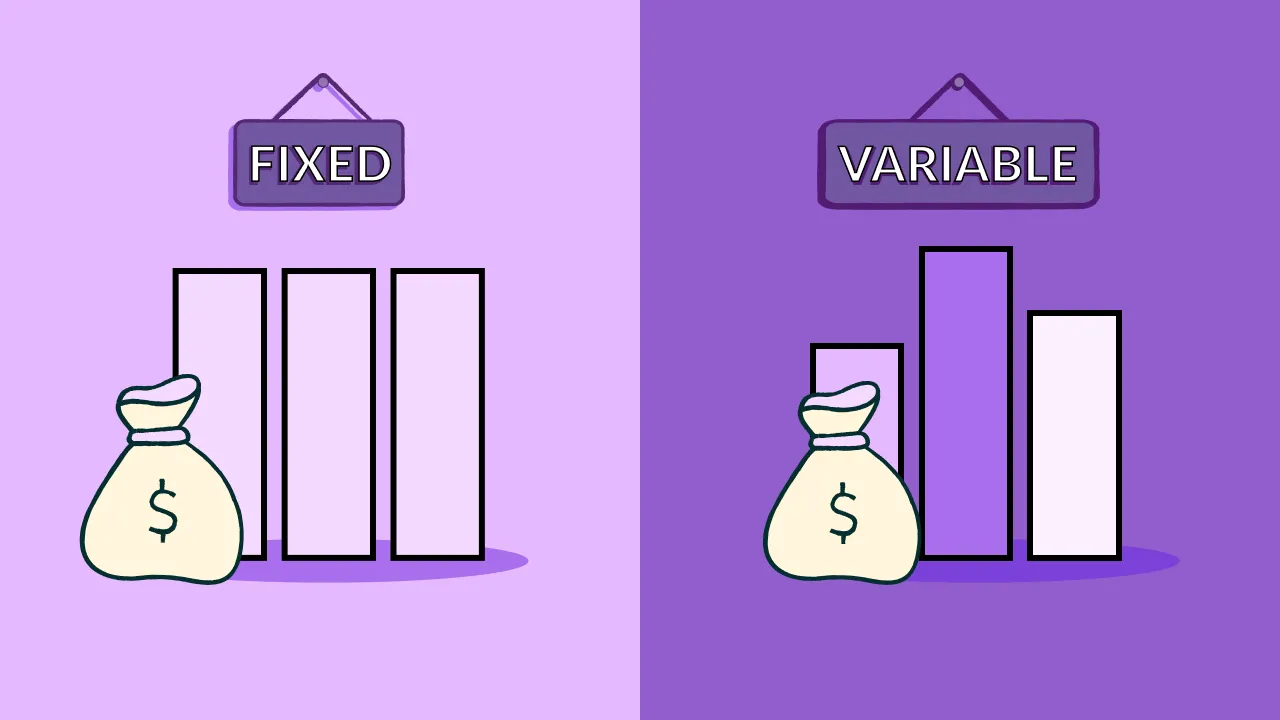
Interest rates are a critical factor in loans, mortgages, and investments. Choosing between fixed and variable interest rates can significantly affect your monthly payments, total loan cost, and financial stability.
This guide explains the differences, advantages, disadvantages, and scenarios where each type of rate is best suited.
What Are Fixed and Variable Interest Rates?
1. Fixed Interest Rates
- Definition: Interest rate remains the same throughout the loan tenure.
- Key Feature: Predictable monthly payments, easy budgeting.
- Common Use: Home loans, personal loans, car loans.
Example:
| Loan Amount | Term | Interest Rate | Monthly Payment | Total Interest |
|---|---|---|---|---|
| $200,000 | 20 years | 6% fixed | $1,432 | $143,743 |
Tip: Fixed rates provide stability during rising interest periods.
2. Variable Interest Rates
- Definition: Interest rate fluctuates based on a benchmark (e.g., central bank rates or LIBOR).
- Key Feature: Monthly payments can increase or decrease over time.
- Common Use: Mortgages, student loans, adjustable personal loans.
Example:
| Loan Amount | Term | Initial Rate | Possible Rate Range | Monthly Payment |
|---|---|---|---|---|
| $200,000 | 20 years | 5% | 4–8% | $1,320 – $1,467 |
Insight: Variable rates can save money if interest rates drop, but may increase costs if rates rise.
Pros and Cons
| Feature | Fixed Rate | Variable Rate |
|---|---|---|
| Payment Predictability | High | Low |
| Protection Against Rate Hikes | Yes | No |
| Potential Savings | No | Yes, if rates fall |
| Initial Rate | Usually Higher | Usually Lower |
| Budgeting Ease | Very Easy | Less Predictable |
| Risk | Low | Higher |
| Long-term Costs | Stable | Can vary significantly |
Factors to Consider When Choosing
1. Loan Tenure
- Short-term loans: Variable rates may offer lower initial costs
- Long-term loans: Fixed rates provide stability and protection against inflation
2. Interest Rate Trends
- Rising rates: Fixed rates are safer
- Falling rates: Variable rates can save money
Example Table: Payment Comparison Over 5 Years
| Loan Type | Initial Rate | Rate After 3 Years | Total Paid |
|---|---|---|---|
| Fixed | 6% | 6% | $86,000 |
| Variable | 5% | 7% | $88,500 |
Insight: Variable loans can be cheaper initially but risk higher payments later.
3. Risk Tolerance
- Low-risk borrowers: Fixed rates are better
- Flexible borrowers with good cash flow: Variable rates may work
4. Loan Type
| Loan Type | Typical Recommendation |
|---|---|
| Home Loan | Fixed for long-term, variable if short-term or adjustable options available |
| Personal Loan | Usually fixed; variable less common |
| Student Loan | Variable may save costs if early repayment possible |
| Business Loan | Depends on market rates and cash flow flexibility |
5. Economic Environment
- Central bank policies, inflation rates, and market volatility affect variable rates
- Fixed rates insulate borrowers from economic fluctuations
Real-World Example: Mortgage Decision
Suppose you are borrowing $300,000 for 30 years:
| Rate Type | Interest Rate | Monthly Payment | Total Interest Paid |
|---|---|---|---|
| Fixed | 6% | $1,799 | $347,600 |
| Variable | 5% initial, up to 7% | $1,610 – $1,995 | $325,000 – $398,000 |
Insight: Fixed rate guarantees predictable payments, while variable may save money or increase costs depending on rate movements.
Strategies for Choosing the Best Rate
- Short-Term Borrowers: Consider variable if rates are low
- Long-Term Borrowers: Fixed rates protect against increases
- Partial Fixed Approach: Hybrid loans allow fixed for initial years, then variable
- Refinancing Options: Monitor rates for opportunities to switch from variable to fixed
- Budget Planning: Always calculate worst-case scenario payments
How Interest Rate Changes Affect Borrowers
| Scenario | Fixed Rate | Variable Rate |
|---|---|---|
| Interest rates rise | No change | Payments increase |
| Interest rates fall | No change | Payments decrease |
| Inflation rises | No impact on rate | May increase if linked to benchmark |
| Budgeting needs | Easy to plan | Need contingency fund |
Pros and Cons Summarized
| Factor | Fixed Rate Advantage | Variable Rate Advantage |
|---|---|---|
| Stability | ✔️ Predictable payments | ❌ Payment may vary |
| Cost | ❌ Higher initial rate | ✔️ Lower initial rate |
| Risk | ✔️ Protected from hikes | ❌ Exposed to rate increases |
| Flexibility | ❌ Less chance to benefit from falling rates | ✔️ Can benefit if rates decrease |
| Long-Term Planning | ✔️ Easy to plan | ❌ Requires monitoring |
Tips to Make the Best Choice
- Compare both options with total repayment cost scenarios
- Check current market trends and central bank policies
- Consider your financial stability and ability to handle payment fluctuations
- Read the loan agreement carefully for adjustment caps, frequency, and maximum rate limits
- Consider hybrid loans to balance stability and potential savings
Frequently Asked Questions (FAQs)
What is a fixed interest rate?
A fixed rate remains constant throughout the loan, providing predictable payments and protection against interest rate hikes.
What is a variable interest rate?
A variable rate changes over time based on a benchmark rate, which can increase or decrease monthly payments.
Which is better for a home loan?
- Fixed rates are better for long-term stability
- Variable rates may save money if rates fall in the short-term
Can I switch from variable to fixed?
Yes, many lenders allow refinancing or rate conversion, but it may involve fees.
How do I choose the best option?
Consider loan term, risk tolerance, payment stability, and market conditions before deciding.
Final Thoughts
Choosing between fixed and variable interest rates is a critical financial decision. Key takeaways:
- Fixed rates = stability, predictable payments, and long-term protection
- Variable rates = potential savings if rates fall, but higher risk
- Assess loan tenure, income stability, and market trends before deciding
- Use comparison tables, calculators, and expert advice to make informed choices
Remember: Even small differences in interest rates can save thousands of dollars over a long-term loan, making this decision crucial for personal and business finance.