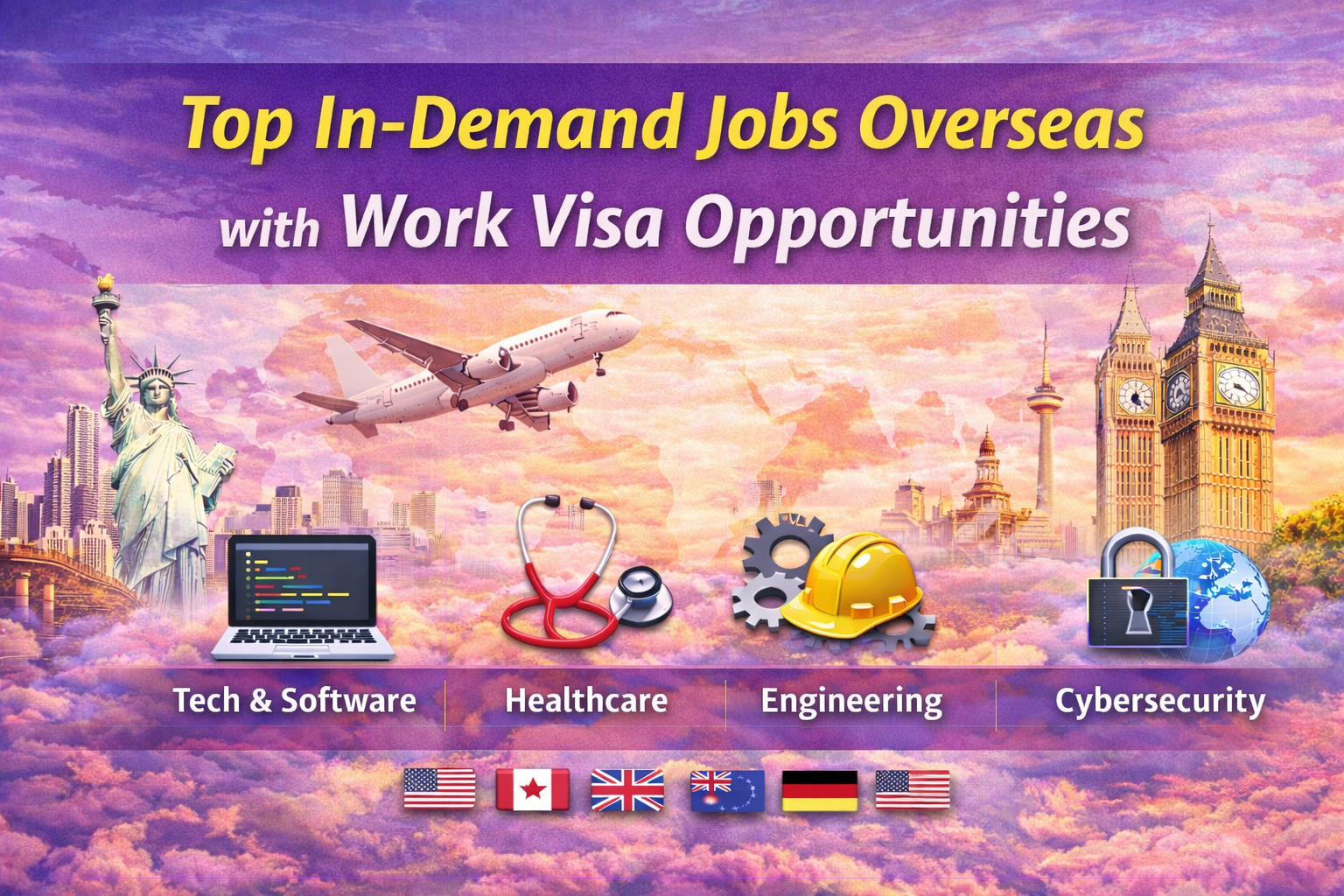
Top In-Demand Jobs Overseas with Work Visa Opportunities
In an increasingly connected world, many professionals are exploring career opportunities beyond their home countries. Businesses and organizations in several countries look for skilled workers to help support economic growth, technological development, and essential services. Because of this, certain professions are frequently listed among the most in-demand roles internationally.
While employment conditions, salaries, and visa processes vary by country, qualified professionals with the right education and experience may find opportunities in overseas job markets. Some employers may provide assistance with work visa applications when they need specialized skills that are not easily available locally.
This article highlights several job sectors that often appear on international skilled occupation lists and are associated with global workforce demand.
Technology and Software Development
The technology sector continues to grow rapidly around the world. Businesses rely heavily on digital systems, software platforms, and cloud infrastructure to operate efficiently. As a result, technology professionals are frequently among the most sought-after workers globally.
Roles such as software developers, IT system administrators, cybersecurity specialists, and cloud engineers are often included in skilled worker programs in several countries.
Technology professionals with experience in programming languages, software architecture, and system management may find opportunities in international companies, technology startups, and global service providers.
Because technology evolves quickly, professionals who continue learning and updating their technical skills often improve their career prospects.
Healthcare and Medical Professions
Healthcare systems require a large workforce to provide essential medical services. Many countries face shortages of qualified healthcare workers, particularly in nursing, medical support services, and specialized medical roles.
Hospitals and healthcare organizations sometimes recruit internationally to meet these workforce needs. However, healthcare professionals must meet licensing and professional qualification standards before working in another country.
Typical requirements for healthcare professionals may include credential verification, professional registration, and language proficiency assessments.
Healthcare careers are often valued because they contribute directly to public health and community well-being.
Engineering and Infrastructure Roles
Engineering professionals are important for infrastructure development, manufacturing, and energy systems. Civil engineers, mechanical engineers, electrical engineers, and environmental engineers contribute to projects such as transportation networks, construction, and industrial production.
Countries investing in infrastructure or renewable energy projects may require experienced engineers to support development plans. As a result, engineering roles often appear on skilled migration lists used by immigration authorities.
Engineers typically need a recognized academic qualification and relevant professional experience before applying for international positions.
Data Science and Analytics
In today’s digital economy, data plays an important role in helping organizations make informed decisions. Data scientists and analysts examine large datasets to identify patterns, trends, and insights that can support business strategy.
Industries such as finance, healthcare, retail, and technology rely on data analysis to improve performance and customer experience. Because of this, professionals who can manage and interpret complex data are becoming increasingly valuable.
Candidates with knowledge of statistics, machine learning, and data analysis tools may find opportunities in companies that rely on data-driven decision-making.
Cybersecurity and Information Security
As organizations adopt more digital systems, protecting information networks has become a priority. Cybersecurity professionals help companies protect their systems from security threats and maintain the integrity of sensitive data.
Cybersecurity specialists often work in roles related to network monitoring, security risk management, and system protection.
Because cyber threats continue to evolve, companies and government institutions invest in professionals who understand modern cybersecurity practices.
Professionals with experience in information security may find opportunities in industries that depend heavily on digital infrastructure.
Finance and Accounting
Financial professionals support organizations by managing financial records, regulatory compliance, and financial planning. Accountants, financial analysts, auditors, and compliance specialists are important for maintaining accurate financial operations.
Global companies often seek professionals who understand financial reporting standards and international regulatory frameworks.
Professionals with education in finance or accounting, along with relevant work experience, may find opportunities with multinational organizations or financial service providers.
Renewable Energy and Environmental Careers
Renewable energy has become a growing sector as countries focus on sustainable development and environmental protection. Engineers and specialists working in renewable energy projects help develop technologies related to solar power, wind energy, and energy efficiency.
Governments and private organizations are investing in clean energy projects to support long-term environmental goals. As these initiatives expand, professionals with expertise in environmental engineering and sustainable energy systems may find opportunities in this sector.
Skilled Trades and Technical Professions
In addition to professional roles, skilled trade workers are also important in many international job markets. Electricians, plumbers, welders, and construction technicians support infrastructure maintenance and development.
Some regions experience shortages of skilled trade workers, especially in construction and manufacturing industries. As a result, technical professions may be included in workforce development programs designed to address labor gaps.
Workers in skilled trades usually require practical training, technical certification, and relevant work experience.
Preparing for Overseas Employment
Individuals interested in working abroad should prepare carefully before applying for international opportunities. Researching job markets, understanding visa requirements, and developing relevant skills are important steps in the process.
Some helpful preparation strategies include:
-
Obtaining recognized educational qualifications
-
Gaining practical experience in the chosen field
-
Developing professional communication skills
-
Preparing a clear and professional resume
-
Applying through legitimate employers and official job platforms
Immigration requirements vary by country, so applicants should always verify information through official government immigration websites.
Important Disclaimer
This article is intended for general informational purposes only. Employment opportunities, visa eligibility, and job requirements may vary depending on country regulations and labor market conditions. Individuals should consult official immigration authorities or licensed professionals for accurate and up-to-date guidance.
Final Thoughts
Global job opportunities continue to grow as industries expand and economies become more interconnected. Sectors such as technology, healthcare, engineering, finance, and renewable energy remain important contributors to economic development.
Professionals who invest in education, develop practical skills, and stay informed about global industry trends may improve their chances of finding meaningful opportunities in international job markets.
While pursuing an overseas career requires preparation and compliance with immigration regulations, it can provide valuable professional experience and exposure to diverse work environments.