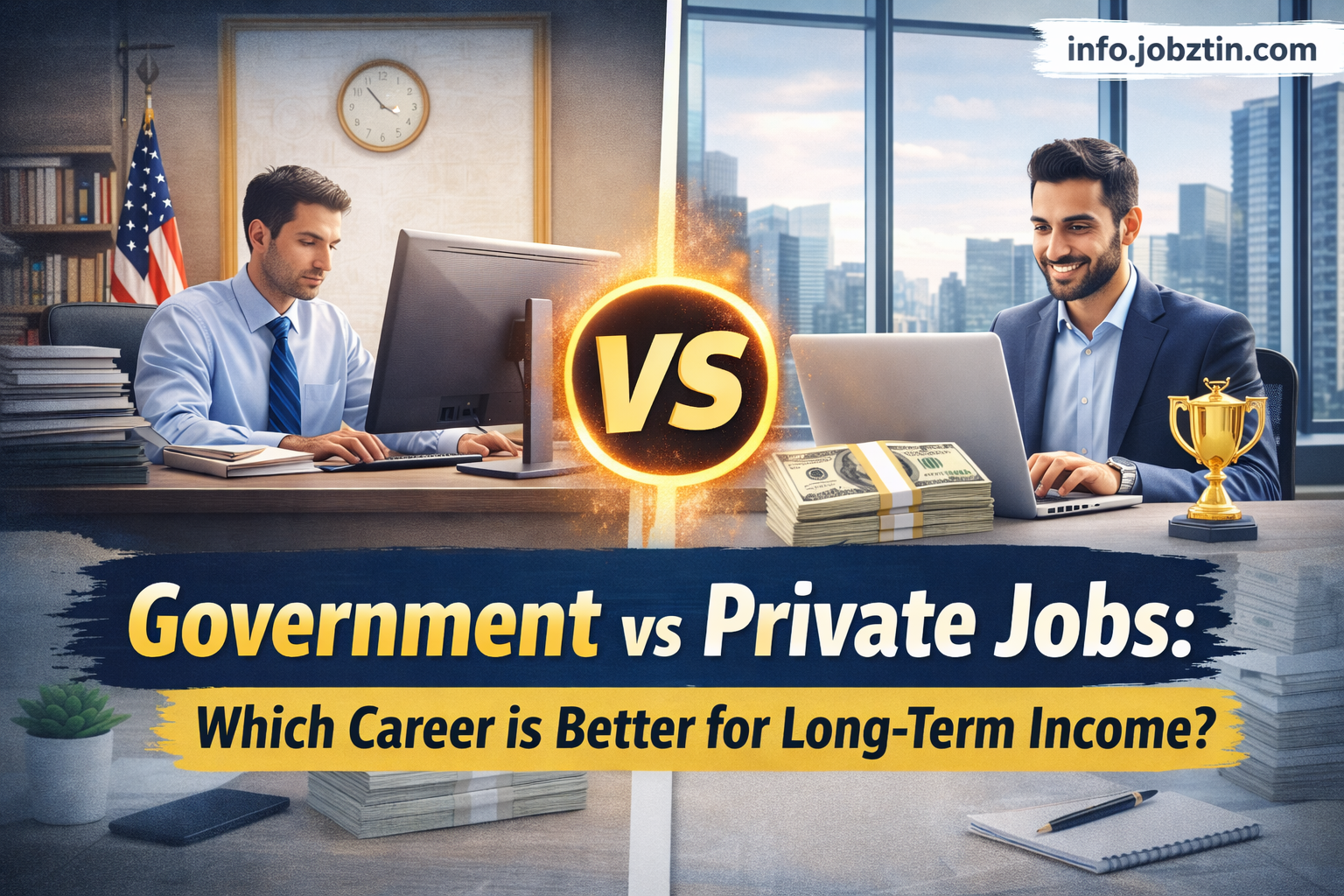
Government vs Private Jobs: Which Career is Better for Long-Term Income?
Introduction
Choosing between a government job and a private job is one of the most important career decisions, especially for individuals focused on long-term income and financial stability. In many countries, including developing economies, government jobs are often seen as secure and prestigious, while private sector jobs are associated with higher salaries and faster career growth. However, the reality is more nuanced than simply comparing paychecks.
Many job seekers struggle with questions like: Is job security more important than salary growth? Should I prioritize stability or flexibility? Which path offers better long-term financial benefits? These are valid concerns, especially in an unpredictable global economy.
In this detailed guide, we will explore the differences between government and private jobs, compare their long-term income potential, and provide practical insights to help you make an informed decision. By the end of this article, you will have a clear understanding of which career path aligns best with your financial goals, lifestyle preferences, and long-term ambitions.
Table of Contents
- Overview of Government vs Private Jobs
- Key Highlights
- Government Jobs: Detailed Analysis
- Private Jobs: Detailed Analysis
- Salary Comparison and Long-Term Income
- Job Security vs Career Growth
- Step-by-Step Guide to Choosing the Right Career
- Benefits and Challenges of Each Sector
- Expert Tips for Career Success
- Common Mistakes to Avoid
- FAQs
- Conclusion
Overview of Government vs Private Jobs
Government jobs are positions offered by public sector organizations, including ministries, departments, and state-owned institutions. These jobs are known for their stability, structured pay scales, and long-term benefits such as pensions and allowances.
On the other hand, private jobs are offered by businesses, corporations, and startups. These roles often provide competitive salaries, performance-based incentives, and opportunities for rapid career growth.
In 2026, both sectors continue to evolve. Governments are modernizing their systems, while private companies are expanding globally and adopting remote work models. As a result, the decision between the two depends on multiple factors, including income potential, work-life balance, and personal career goals.
Key Highlights
- Government jobs offer stability and long-term benefits
- Private jobs provide higher earning potential and faster growth
- Skill development plays a crucial role in private sector success
- Long-term income depends on career progression and financial planning
- Both sectors have unique advantages and limitations
Government Jobs: Detailed Analysis
Job Security and Stability
One of the biggest advantages of government jobs is job security. Once you secure a government position, the chances of losing your job are relatively low compared to the private sector. This stability provides peace of mind and allows individuals to plan their financial future confidently.
Salary Structure
Government salaries are usually fixed and based on standardized pay scales. While starting salaries may be lower than private jobs, regular increments and promotions ensure steady income growth over time.
Benefits and Perks
Government employees often receive additional benefits such as:
- Pension plans
- Health insurance
- Housing allowances
- Paid leaves
These benefits contribute significantly to long-term financial security.
Work-Life Balance
Government jobs typically offer better work-life balance due to fixed working hours and fewer performance pressures.
Private Jobs: Detailed Analysis
Salary and Income Growth
Private sector jobs are known for higher starting salaries and performance-based increments. Employees who perform well can experience rapid income growth within a short period.
Career Growth Opportunities
Private companies offer more opportunities for promotions, skill development, and career advancement. High performers can quickly move into leadership roles.
Flexibility and Innovation
The private sector is more dynamic and flexible. Employees often work in innovative environments and have opportunities to explore new ideas and technologies.
Risks and Challenges
Unlike government jobs, private jobs may come with:
- Job insecurity
- High competition
- Performance pressure
However, these challenges also create opportunities for growth.
Salary Comparison and Long-Term Income
When comparing long-term income, it is important to look beyond the initial salary.
Government Jobs
- Steady income growth
- Guaranteed benefits
- Lower risk
Private Jobs
- Higher earning potential
- Performance-based bonuses
- Opportunities for side income
In the long run, private jobs often offer higher income potential, especially for skilled professionals. However, government jobs provide consistent and predictable financial stability.
Job Security vs Career Growth
This is the core difference between the two sectors.
- Government jobs: Focus on stability and long-term benefits
- Private jobs: Focus on growth, innovation, and higher earnings
Your choice depends on whether you value security or growth more.
Step-by-Step Guide to Choosing the Right Career
Step 1: Define Your Priorities
Ask yourself what matters most—security, salary, or career growth.
Step 2: Assess Your Skills
Evaluate your strengths and identify which sector suits your abilities.
Step 3: Research Opportunities
Explore job markets, salary trends, and growth potential in both sectors.
Step 4: Consider Long-Term Goals
Think about where you want to be in 10–15 years.
Step 5: Make an Informed Decision
Choose a path that aligns with your personal and financial goals.
Benefits and Challenges of Each Sector
Government Jobs
Benefits:
- Job security
- Stable income
- Retirement benefits
Challenges:
- Limited salary growth
- Slow promotions
Private Jobs
Benefits:
- High salary potential
- Fast career growth
- Skill development
Challenges:
- Job insecurity
- Work pressure
Expert Tips for Career Success
- Focus on skill development regardless of sector
- Keep learning and upgrading your knowledge
- Build a strong professional network
- Manage your finances wisely
- Stay adaptable to market changes
Success depends more on your mindset and effort than the sector you choose.
Common Mistakes to Avoid
- Choosing a career based only on salary
- Ignoring personal interests
- Lack of long-term planning
- Not upgrading skills
- Following societal pressure blindly
Avoiding these mistakes can help you build a fulfilling and financially stable career.
FAQs
1. Which job is better for long-term income?
Private jobs generally offer higher income potential, but government jobs provide stable and predictable earnings.
2. Are government jobs still worth it in 2026?
Yes, they offer stability, benefits, and long-term security, making them a good choice for many individuals.
3. Can I switch from government to private job?
Yes, but it may require skill upgrades and adjustments to a different work environment.
4. Which job has better work-life balance?
Government jobs typically offer better work-life balance.
5. Do private jobs pay more than government jobs?
In most cases, yes, especially in high-demand industries.
Internal Linking Suggestions
- Link to: “Top High Paying Jobs in 2026”
- Link to: “Best Skills for High Income Careers”
- Link to: “How to Prepare for Government Jobs”
- Link to: “Freelancing vs Full-Time Jobs”
Google Discover Optimization
Feature Image Suggestion:
- Size: 1200×628
- Split image showing government office vs corporate office
- Clean, high-resolution, no watermark
In-Article Image Suggestions:
- Government office workspace
- Corporate office environment
- Salary growth chart comparison
- Career planning illustration
- Work-life balance concept image
Conclusion
The choice between government and private jobs ultimately depends on your priorities, goals, and personality. Government jobs provide stability, structured growth, and long-term benefits, making them ideal for individuals seeking security. On the other hand, private jobs offer higher income potential, faster career growth, and dynamic opportunities.
There is no one-size-fits-all answer. The best career is the one that aligns with your strengths, values, and long-term vision. By focusing on skill development, continuous learning, and smart financial planning, you can achieve success in either sector.