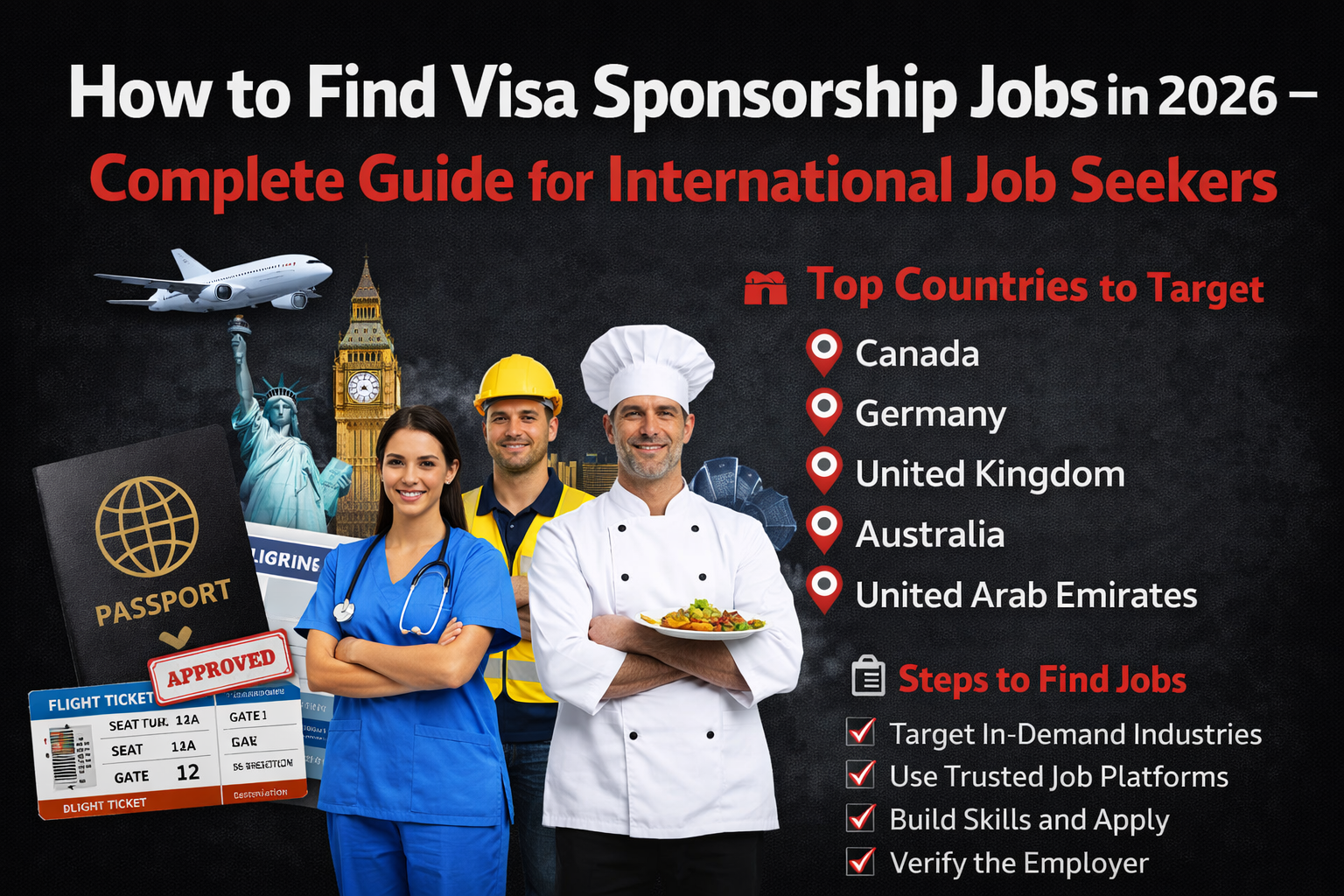
How to Find Visa Sponsorship Jobs in 2026 – Complete Guide for International Job Seekers
Introduction
Working abroad is a career goal for many people who want better opportunities, international exposure, and long-term professional growth. For many international job seekers, one of the most practical routes is finding a job that offers visa sponsorship. This means an employer is willing to support a qualified foreign worker’s legal work visa application according to the immigration rules of that country.
In 2026, many employers may continue hiring international candidates in industries where there is a shortage of skilled workers. At the same time, competition remains high, and job seekers need to apply carefully, professionally, and through trusted sources. Finding a visa sponsorship job is not only about submitting resumes. It also involves understanding where to search, how to present your skills, and how to identify genuine opportunities.
This guide explains how international applicants can search for visa sponsorship jobs in a practical, realistic, and professional way.
What Is a Visa Sponsorship Job?
A visa sponsorship job is a position where an employer is willing to support a foreign candidate’s work visa process so the person can legally work in that country. In most cases, the employer must provide official documents related to the job offer, and the candidate must meet education, experience, and legal requirements.
It is important to understand that sponsorship does not automatically guarantee visa approval. Final approval depends on immigration authorities, the employer’s eligibility, and the applicant’s background.
Because of this, serious job seekers should focus on building qualifications and applying through proper channels instead of relying on shortcuts or unrealistic promises.
Step 1: Identify Countries That Commonly Hire Foreign Workers
The first step is to target countries where employers are known to hire international professionals. Different countries have different labor shortages, immigration systems, and work visa categories.
Many international applicants commonly search for opportunities in countries such as:
-
Canada
-
Germany
-
United Kingdom
-
Australia
-
United Arab Emirates
These countries often attract skilled workers in sectors like healthcare, technology, engineering, hospitality, and construction. Instead of applying everywhere, it is usually better to choose a few countries that match your qualifications, language ability, and career goals.
A focused strategy often produces better results than sending random applications to hundreds of employers.
Step 2: Choose the Right Industry
Not every field offers the same chances for international applicants. Visa sponsorship is more common in industries where employers struggle to find enough local workers or where specialized expertise is needed.
Some commonly searched sectors include:
Information Technology
Roles such as software developer, cybersecurity specialist, data analyst, and cloud engineer are often in demand globally.
Healthcare
Registered nurses, care assistants, physiotherapists, and medical technicians may find opportunities in countries facing healthcare staff shortages.
Engineering
Civil, mechanical, electrical, and industrial engineers are often needed in growing economies and large infrastructure markets.
Skilled Trades
Electricians, plumbers, welders, and technicians may also find international opportunities depending on local labor needs.
Hospitality
Chefs, hotel supervisors, and hospitality staff may be hired in regions where tourism and service industries are growing.
Choosing the right industry helps you search more efficiently and improves your chances of finding relevant job postings.
Step 3: Use Trusted Job Platforms
One of the most important steps is knowing where to search. International applicants should focus on professional and reliable sources rather than unknown websites or social media promises.
Trusted places to search include:
-
LinkedIn
-
Indeed
-
Glassdoor
-
Official company career pages
-
Government-approved job portals
-
Licensed recruitment agencies
When searching, use relevant keywords such as:
-
visa sponsorship jobs
-
work visa sponsorship
-
international applicants welcome
-
foreign worker jobs
-
employer sponsored jobs
These terms can help narrow your search and save time.
It is also useful to search directly on company websites, especially large international employers. Some companies clearly mention whether they sponsor work visas in the job description or careers section.
Step 4: Build a Strong Resume and Cover Letter
A professional resume is one of the biggest factors in getting noticed. Employers reviewing international applicants want to quickly understand your qualifications, skills, and work history.
Your resume should:
-
Be clean and easy to read
-
Highlight relevant work experience
-
Include certifications and technical skills
-
Show measurable achievements where possible
-
Match the job description naturally
A strong cover letter can also help. It should explain why you are a suitable candidate, what value you can bring, and why you are applying for that specific role. Keep it professional and direct.
Do not exaggerate skills or include false information. Accuracy matters, especially in international hiring.
Step 5: Check Whether the Employer Can Sponsor
Not every employer is authorized or willing to sponsor foreign workers. Before applying, read the job description carefully and look for signs that the company accepts international applicants.
Helpful signs may include:
-
Mention of visa sponsorship
-
Mention of relocation support
-
Reference to international hiring
-
Licensed sponsor status where applicable
If the posting does not mention sponsorship, the company may still consider it, but it is better to prioritize listings that clearly describe eligibility.
This helps avoid wasting time on roles that are only open to local candidates.
Step 6: Improve Your Skills and Qualifications
International hiring is competitive, so improving your profile can make a real difference. Employers are more likely to sponsor candidates who have strong qualifications and skills that are difficult to replace.
You can improve your profile by:
-
Completing professional certifications
-
Learning industry-specific software or tools
-
Improving English or another required language
-
Gaining more experience in your field
-
Updating your portfolio or LinkedIn profile
Small improvements in presentation and qualifications can strengthen your application significantly.
Step 7: Prepare for Interviews Professionally
Once shortlisted, employers may invite you to an online interview. This stage is important because companies want to assess both your technical ability and communication skills.
Before the interview:
-
Research the company
-
Review the job description
-
Prepare examples from your work experience
-
Practice common interview questions
-
Make sure your internet, audio, and video setup are working properly
Professional communication, confidence, and honesty leave a strong impression.
Step 8: Avoid Scams and Misleading Offers
International job seekers are sometimes targeted by fake recruiters or misleading offers. It is important to stay careful throughout the search process.
Warning signs may include:
-
Requests for large upfront payments
-
Guaranteed visa promises
-
Unrealistic salaries with no clear requirements
-
Unverified recruiters with no company background
-
Poorly written offer letters or unofficial email addresses
Always verify the employer through their official website and confirm whether the company is genuine. A real employer may have a formal hiring process, interviews, and clear documentation.
Conclusion
Finding visa sponsorship jobs in 2026 requires patience, planning, and a realistic strategy. The best approach is to target the right countries, focus on industries with demand, use trusted job platforms, and present yourself professionally.
International job seekers who build strong resumes, improve their skills, and apply through verified sources usually have a better chance of finding genuine opportunities. While the process can take time, careful preparation can make your job search more effective and more professional.