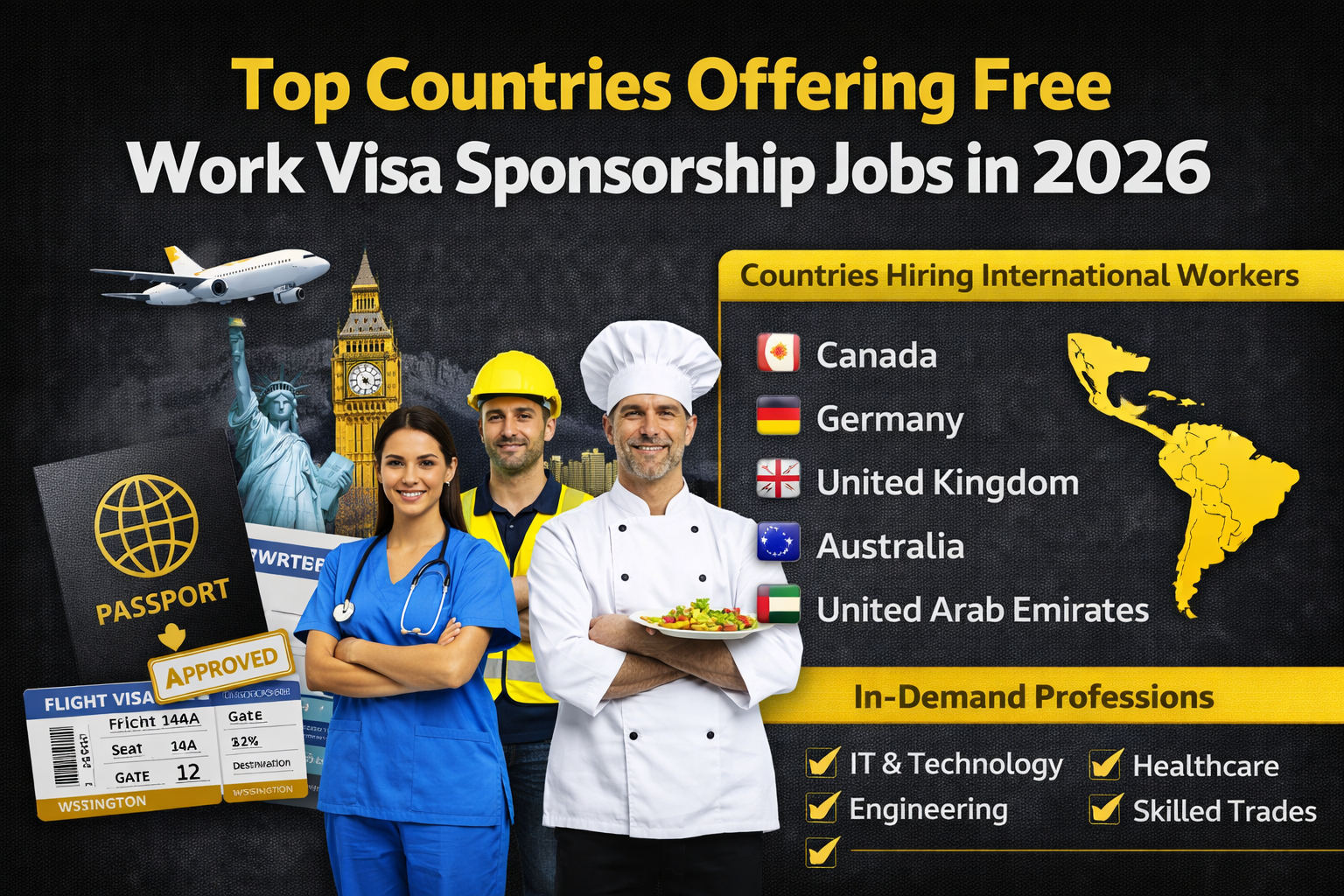
Top Countries Offering Work Visa Sponsorship Jobs in 2026
Working abroad is a career goal for many people who want professional growth, international exposure, and better long-term opportunities. In many cases, foreign workers can legally work in another country through a work visa sponsorship job. This usually means an employer is willing to support a qualified candidate’s visa or work permit application according to that country’s immigration laws.
In 2026, some countries may continue hiring international workers in sectors facing labor shortages. However, visa sponsorship is never automatic. It depends on employer eligibility, government immigration rules, job market demand, and the applicant’s qualifications.
This guide explains the process in a practical and realistic way. It covers what visa sponsorship jobs are, which countries may offer such opportunities, which industries are commonly involved, and how job seekers can search step by step through legitimate channels.
Step 1: Understand What a Work Visa Sponsorship Job Means
A work visa sponsorship job is a position in which an employer supports a foreign candidate’s application to legally work in that country. In most cases, the employer must provide official documents confirming the job offer and showing that the candidate is suitable for the role.
It is important to understand one key point:
the employer may support the application, but the final visa decision is made by immigration authorities, not the company.
That means sponsorship does not guarantee visa approval. Applicants must still meet all legal and professional requirements.
Common requirements may include:
-
Relevant education or training
-
Professional work experience
-
Language ability where required
-
Valid passport and personal documents
-
Compliance with immigration and labor regulations
Understanding this from the beginning helps job seekers avoid unrealistic expectations and focus on genuine opportunities.
Step 2: Focus on Countries That Commonly Hire International Workers
Some countries are better known for hiring foreign professionals when local skill shortages exist. While policies can change, several destinations are often considered by international applicants.
Canada
Canada is known for structured immigration and work permit pathways. Employers in fields such as technology, healthcare, engineering, logistics, and finance may hire international professionals when local shortages exist.
Canada remains attractive because of its transparent immigration systems and strong demand in several skilled sectors.
Germany
Germany has a large industrial economy and often needs skilled professionals in engineering, manufacturing, healthcare, and IT. Qualified workers with recognized education and valid job offers may be able to apply through programs such as the EU Blue Card, depending on eligibility.
United Kingdom
The United Kingdom offers a Skilled Worker route for certain occupations. Employers who are licensed sponsors may hire foreign candidates if the role meets legal and salary requirements.
Healthcare, engineering, and technical fields are often part of this discussion.
Australia
Australia has skilled migration and employer-sponsored pathways for occupations facing labor shortages. Sectors such as healthcare, construction, engineering, and IT are often important for international applicants.
United Arab Emirates
The UAE has a large international workforce. Many roles in hospitality, retail, aviation, construction, and professional services are filled by foreign workers through employer-sponsored work permits.
Each country has its own rules, so job seekers should always verify the latest requirements through official government and employer sources.
Step 3: Identify Careers That Often Have International Demand
Not every profession has the same level of international hiring. Employers are more likely to sponsor foreign workers in industries where there is a shortage of qualified candidates or a need for specialized skills.
Some commonly searched sectors include:
Information Technology
-
Software development
-
Cybersecurity
-
Data analysis
-
Cloud computing
Healthcare
-
Registered nursing
-
Care support roles
-
Physiotherapy
-
Medical technology support
Engineering
-
Civil engineering
-
Mechanical engineering
-
Electrical engineering
-
Industrial engineering
Skilled Trades
-
Electricians
-
Plumbers
-
Welders
-
Maintenance technicians
Hospitality and Services
-
Professional chefs
-
Hotel supervisors
-
Hospitality operations staff
Choosing a field that matches your actual qualifications is important. Applying for jobs outside your skill set reduces credibility and may waste time.
Step 4: Search Through Legitimate and Trusted Platforms
One of the safest ways to find visa sponsorship opportunities is by using professional and verified job sources.
Common places to search include:
-
LinkedIn
-
Indeed
-
Glassdoor
-
Official company career pages
-
Government labor or immigration job portals
-
Licensed recruitment agencies
Useful search terms may include:
-
work visa sponsorship jobs
-
visa sponsorship jobs 2026
-
employer sponsored jobs
-
international applicants welcome
-
foreign worker jobs
Job seekers should read listings carefully and check whether the employer clearly mentions sponsorship, relocation, or international hiring eligibility.
Step 5: Prepare a Strong and Honest Application
A professional application is one of the most important parts of the process. Employers reviewing international candidates want to see whether the applicant is qualified, reliable, and suitable for the role.
A strong application should include:
-
A clean and updated resume
-
Relevant work experience
-
Qualifications and certifications
-
Role-specific skills
-
Accurate and honest information
If a cover letter is required, it should clearly explain why you are interested in the job and how your experience matches the position.
It is important not to exaggerate achievements or include false details. Honest applications are more professional and safer for long-term career growth.
Step 6: Verify the Employer Before Moving Forward
Before sharing documents or continuing with any process, job seekers should verify that the employer is real and authorized to hire internationally where applicable.
Useful checks include:
-
Review the official company website
-
Confirm the job appears on the company’s real careers page
-
Check whether contact details match official domains
-
Look for a clear hiring process and interview steps
-
Verify sponsor status where the country requires licensed sponsors
This step is important because international job seekers are sometimes targeted by scams or misleading offers.
Step 7: Avoid Misleading Offers and Unofficial Promises
When searching for jobs abroad, caution is essential. A legitimate employer generally follows a formal hiring process, communicates clearly, and does not make unrealistic promises.
Warning signs may include:
-
Guaranteed visa claims
-
Requests for large upfront payments
-
Unrealistic salary promises without clear job requirements
-
Pressure to act immediately without interviews
-
Unofficial email addresses or vague company details
A genuine work visa process involves employer review, document verification, and government approval. No company can guarantee visa approval in advance.
Step 8: Follow the Official Process Step by Step
Once a job seeker receives a genuine offer, the next stage usually involves following the official process carefully.
This may include:
-
Accepting the job offer
-
Submitting required professional and identity documents
-
Completing employer paperwork
-
Applying for a work visa or permit
-
Waiting for official review and decision
-
Preparing for relocation only after approval
The exact process depends on the country, employer, and occupation. That is why official government immigration websites and direct employer guidance are important.
Conclusion
Work visa sponsorship jobs can offer real opportunities for qualified professionals who want to build careers abroad. Countries such as Canada, Germany, the United Kingdom, Australia, and the UAE may offer pathways for foreign workers in sectors where there is genuine demand.